DIY Rice Heating Pad (with Free Printable Labels)
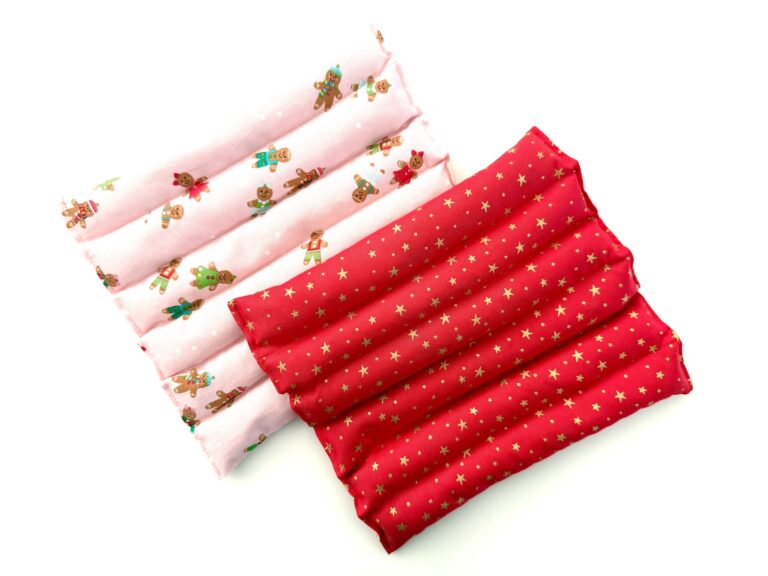
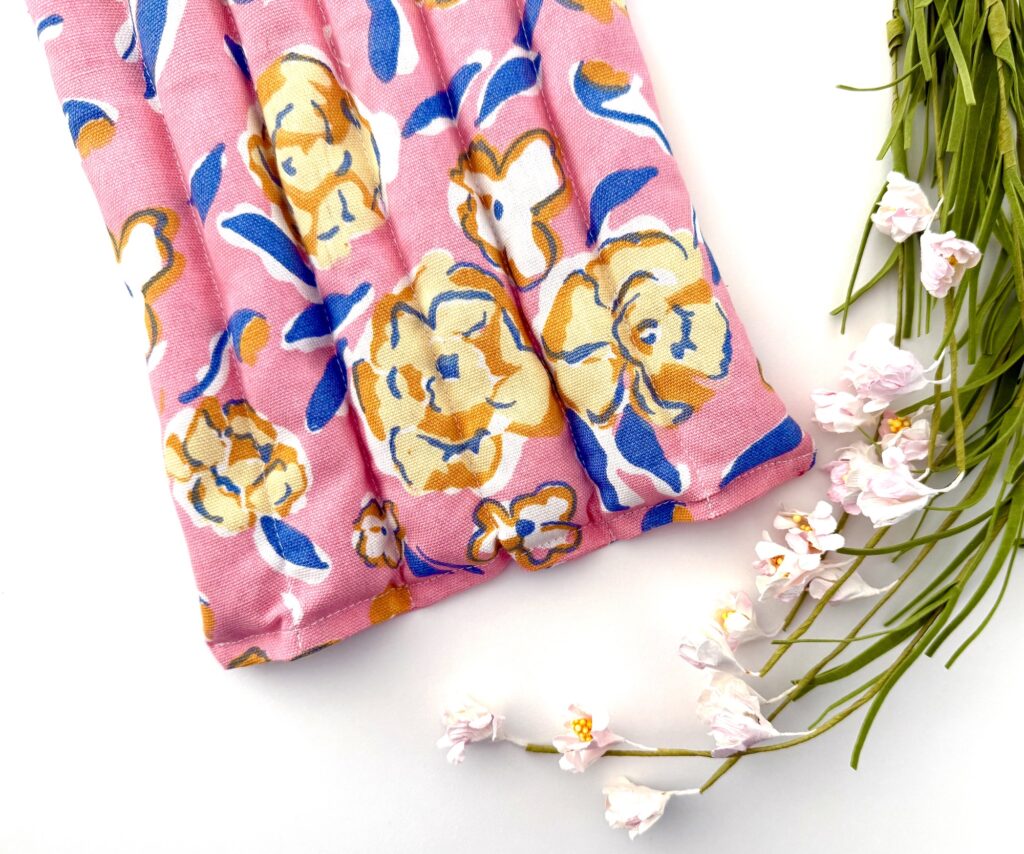
Our DIY rice heating pad can be wrapped around your neck, shoulders, knee or any place you need warmth. This homemade heating pad can be put in the microwave for moist heat.
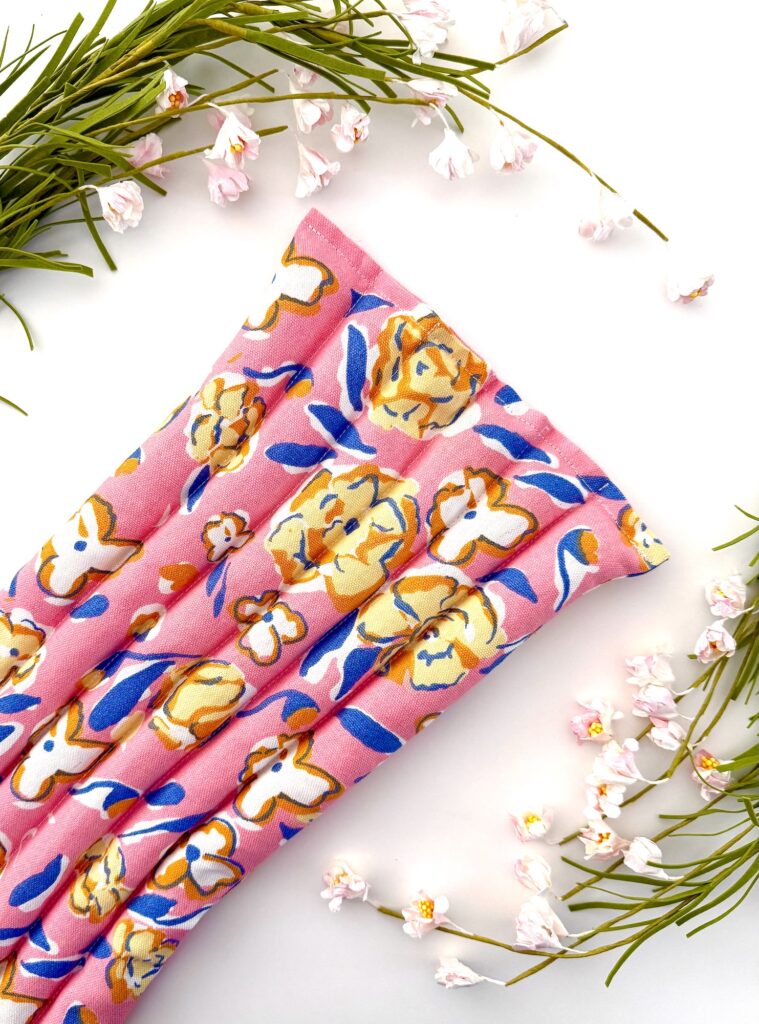
The columns of rice allow this heating pad to bend and wrap around the area you need to add warmth. You may also like our DIY heating pad for neck and shoulders sewing tutorial, too.
All you need is some fabric and some rice. You probably already have both items at home right now!
If you want to make this a scented heating pad, you can add dried flowers or herbs, essential oils or fragrance oil. Our easy DIY lavender eye pillow uses dried flowers, too, so you could make both!
It can also be used cold, too! Just put it in the freezer to make a cold pack.
This is a great beginner sewing project and is very similar to our rice trivets. You can easily make these heating pads in an hour or less.
If you have extra rice, you can easily make these heart hand warmers or DIY hand warmers, too!
How to Sew a Rice Heating Pad
These supplies will make one heating pad.
If you would like a more flexible heating pad, add less rice.
You must use 100% cotton fabric and thread because they will not melt in a microwave. Do not use polyester.
Supplies
- Two 10 X 16 inch (25.5 X 41 cm) cotton fabric rectangles (MUST be 100% cotton!)
- 100% Cotton Thread
- 4 ½ cups uncooked white rice
- Disappearing ink pen (not a heat erasable pen)
- Sewing pins
- Funnel (optional)
- Dried flowers or herbs, essential oil or fragrance oil (optional)
- Free Printable Care Labels (optional)
I highly recommend using a quilting square ruler to quickly and easily cut the rectangles! It’s worth every penny by reducing your frustration while measuring and tracing patterns!
Directions
Step 1
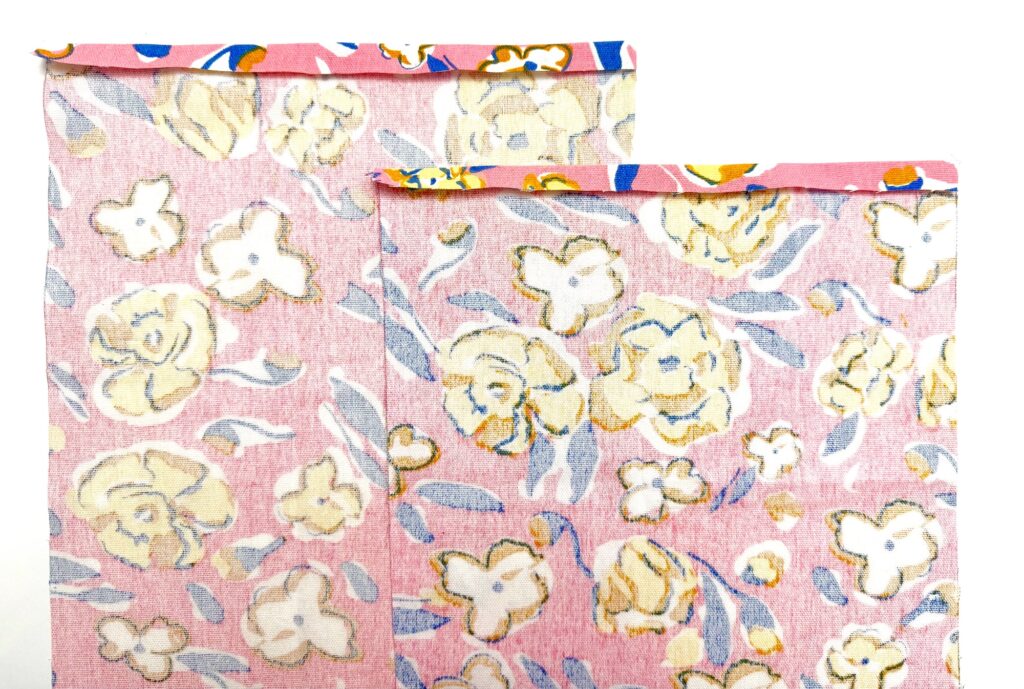
Fold over the short edge of each of the rectangles by ½ inch. Press flat with your iron.
Step 2
Place the rectangles right sides together, matching up the sides that have the folded edges.
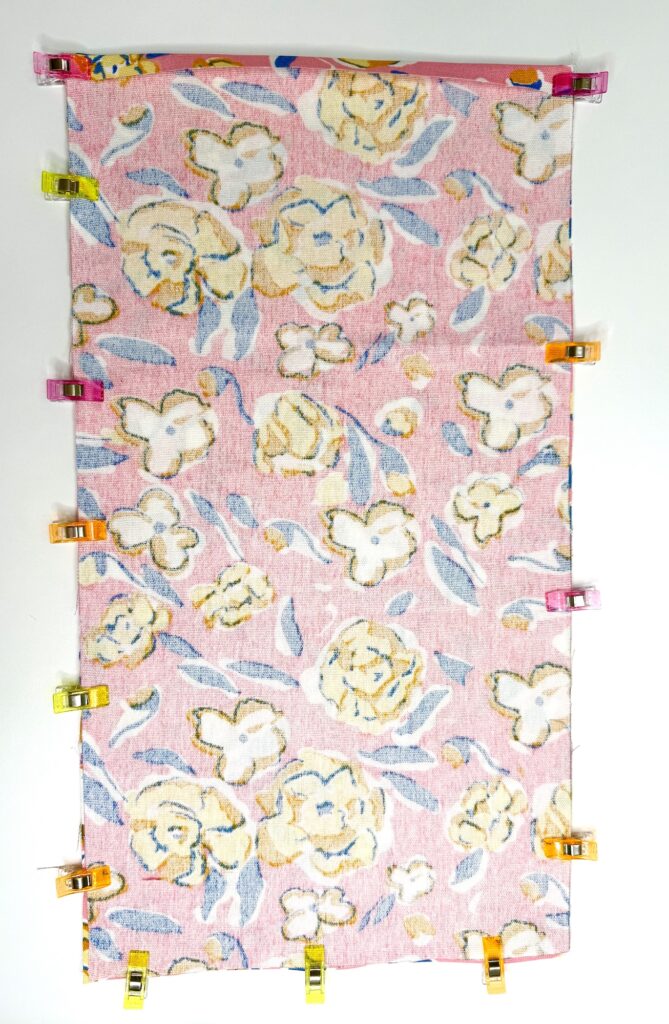
Sew a seam around the three unfinished edges (not the folded edges) using a ½ inch seam allowance.
Step 3
Clip off the corners of the sewn corners. Do this by clipping across the corner close to the stitching but don’t cut the stitching!
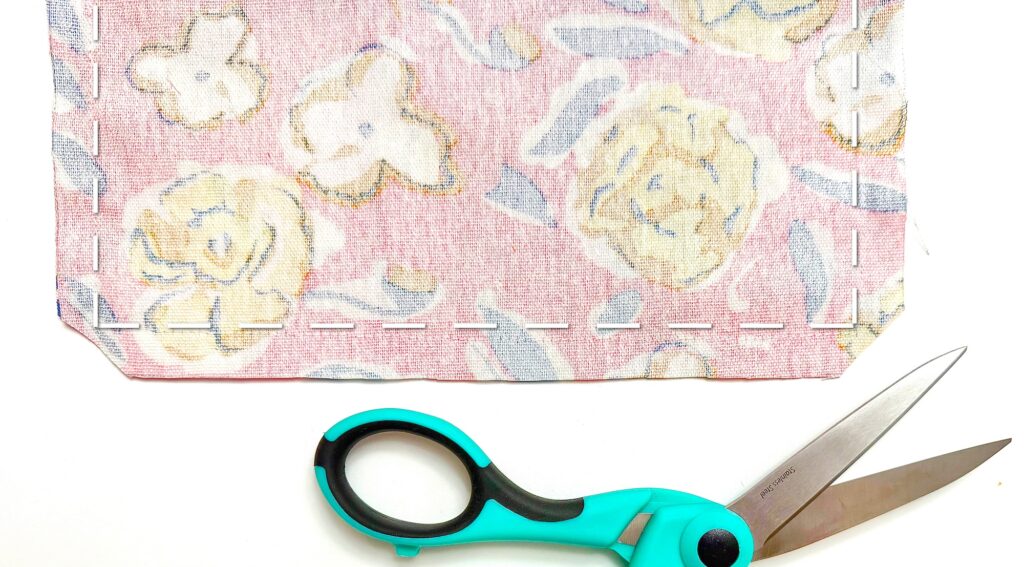
Turn the fabric inside out and push out the corners using your finger or a turning tool.
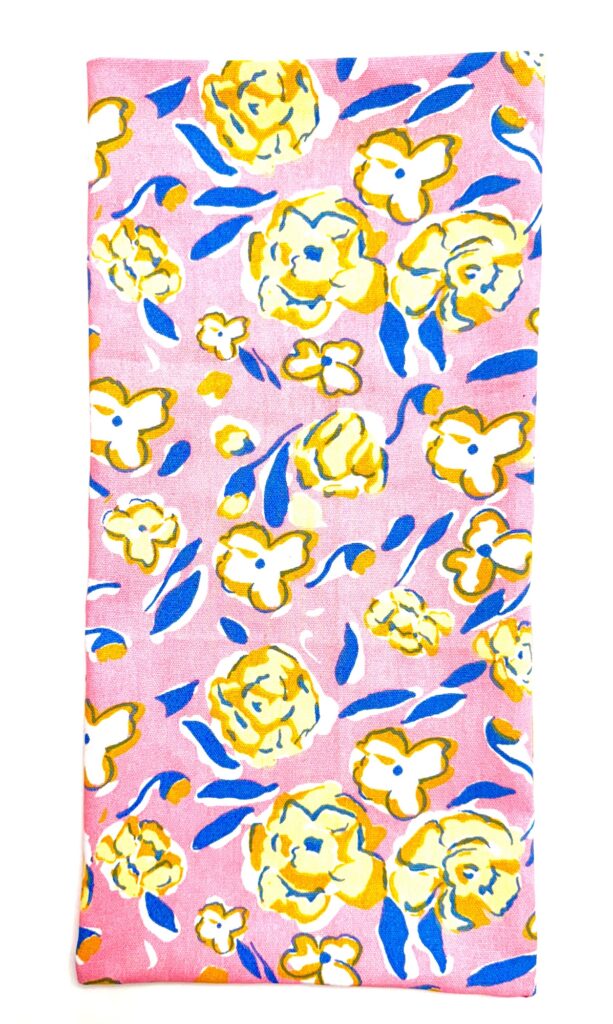
Step 4
Draw lines on the fabric every 1.5 inches (4 cm) using a disappearing ink pen. This sewing ruler makes it really easy to see where to mark.
You should have 6 columns going up and down, with the folded edges on top.
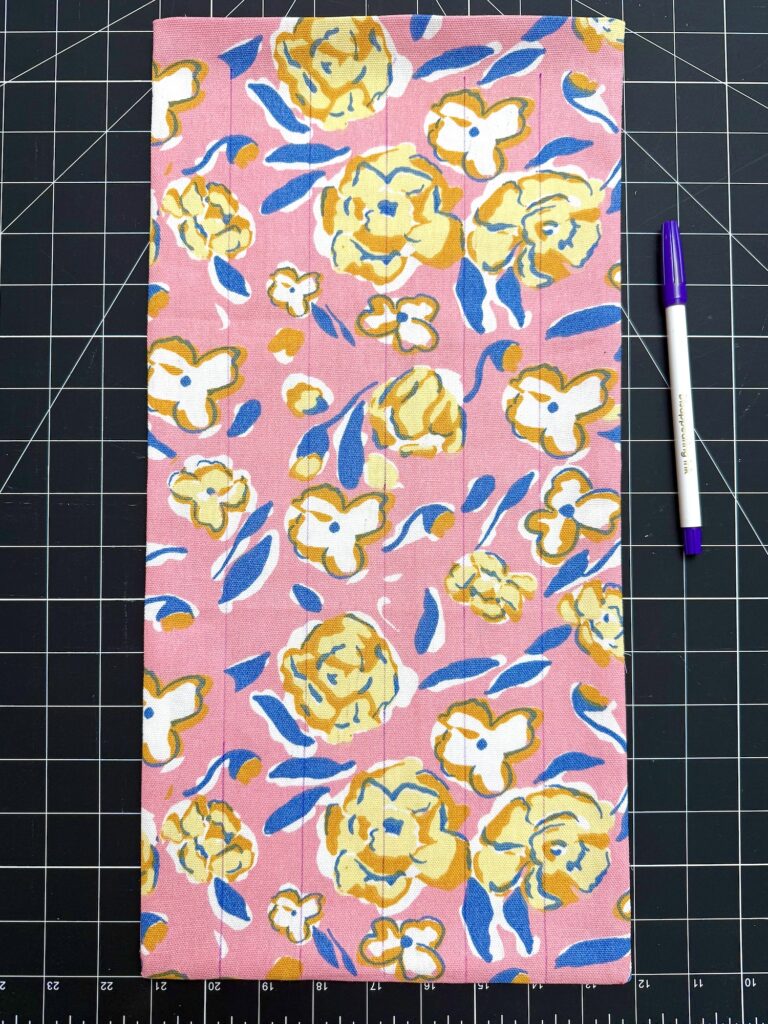
If the measurements aren’t perfect at the end, that’s okay! Just adjust as needed to make the columns roughly the same size.
Step 5
Top stitch along the bottom of the fabric with an ¼ inch seam allowance. This will match the top seam you sew later.
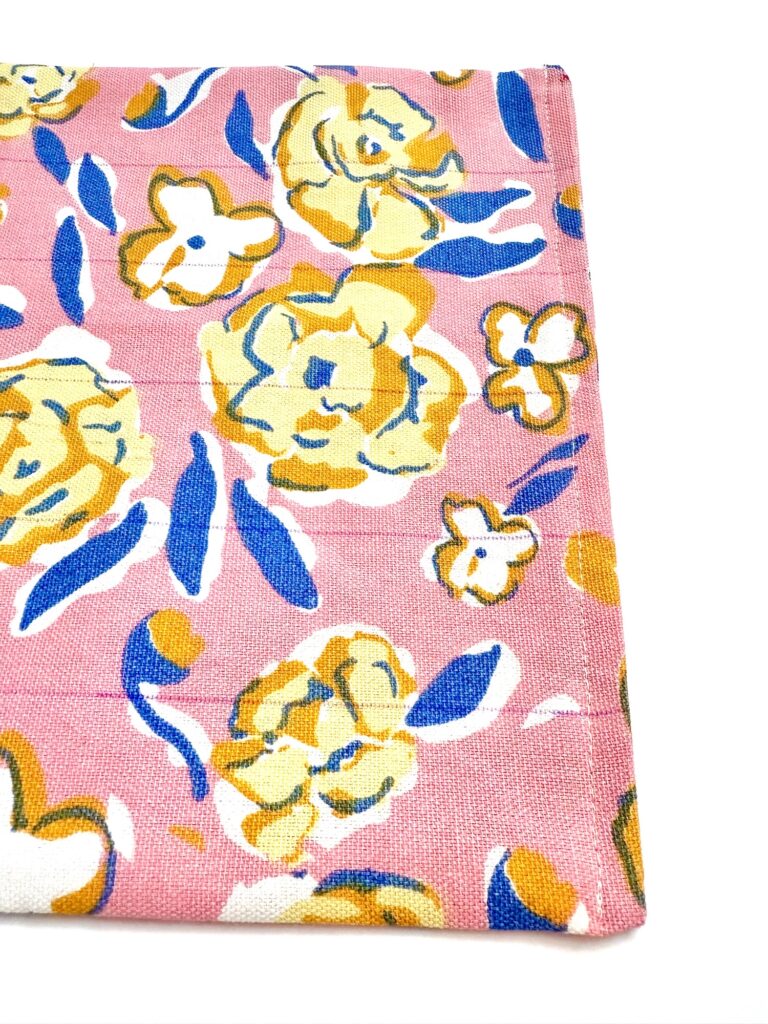
Step 6
Top stitch on each line from the very top to the very bottom of the fabric, backstitching at the beginning and end.
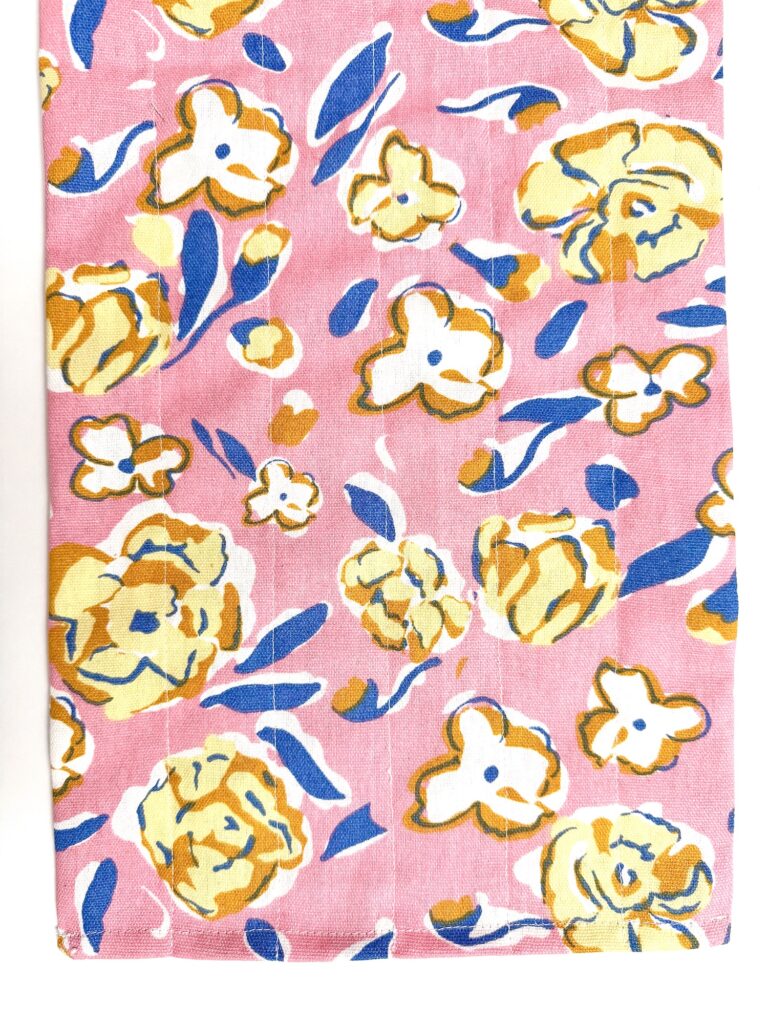
Step 7
If desired, mix the rice with 4 tablespoons of dried flowers or herbs, such as lavender and/or 20-30 drops of essential oil. If using fragrance oil, use fewer drops because it is so strong.
Fill each column with rice. Using a funnel is the best way to get the rice into the fabric channels. (I bought an inexpensive set of funnels at Harbor Freight and I only use them for crafts.)
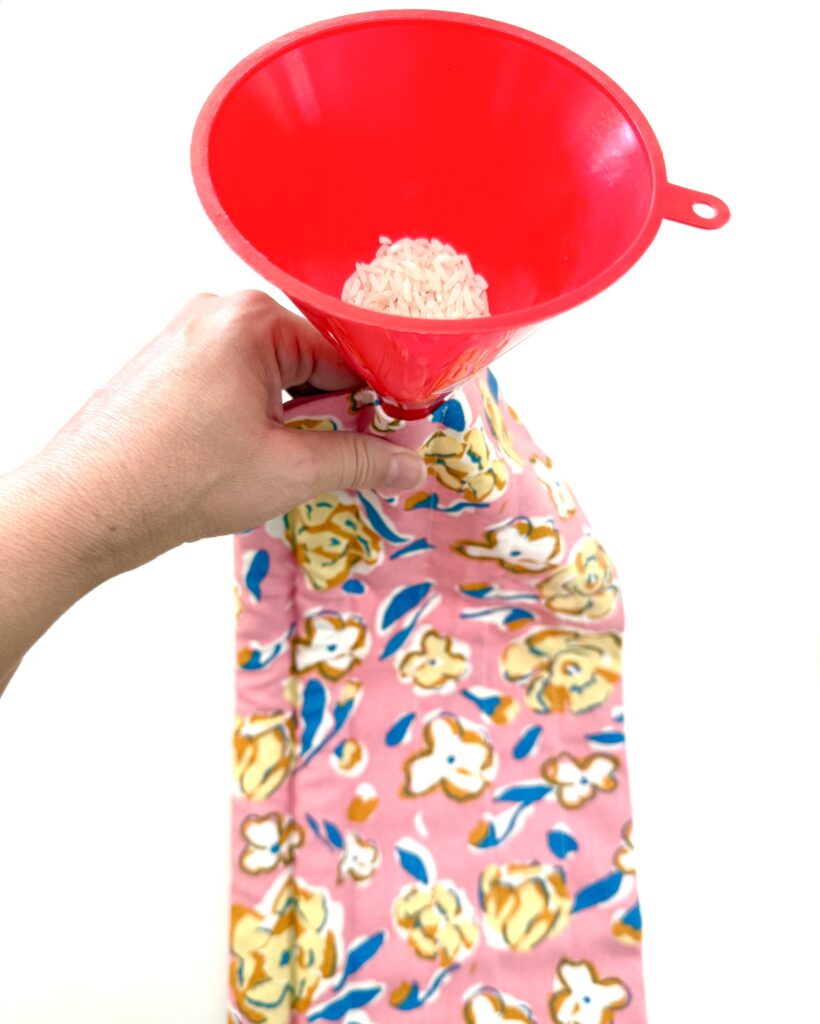
Push the rice down as much as you can. Fill to about 1 inch below the top opening.
Place a straight pin across the top of the column to hold the rice in and keep it from spilling out.
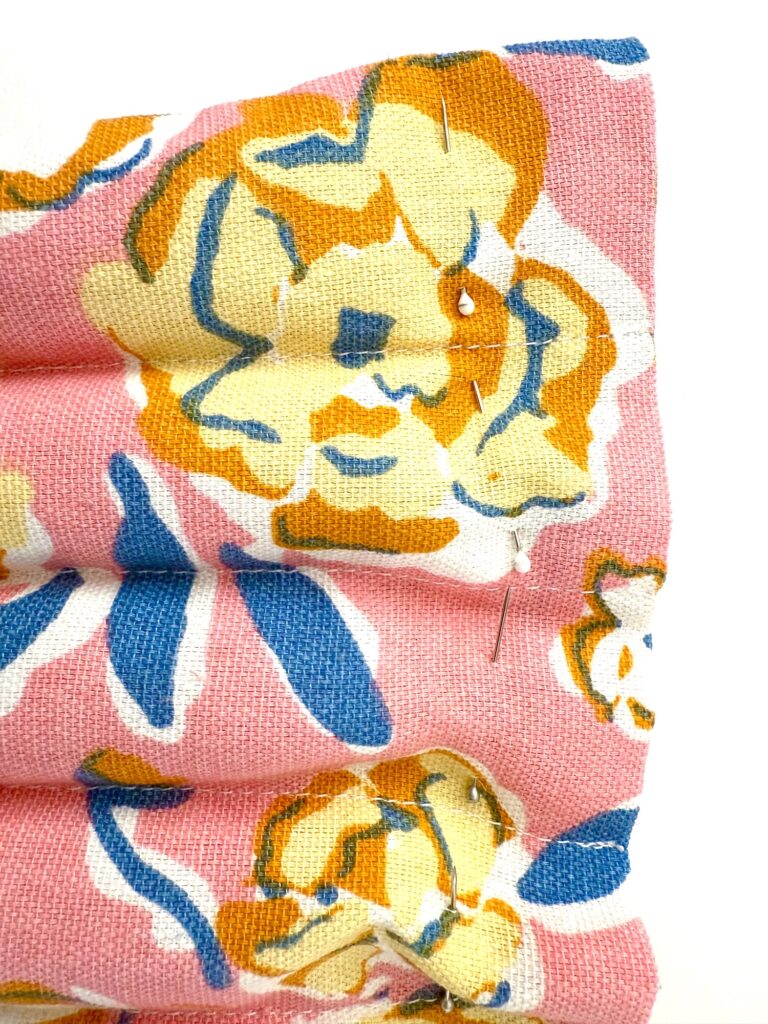
Step 8
Top stitch along the folded edges using a ¼ inch seam allowance.
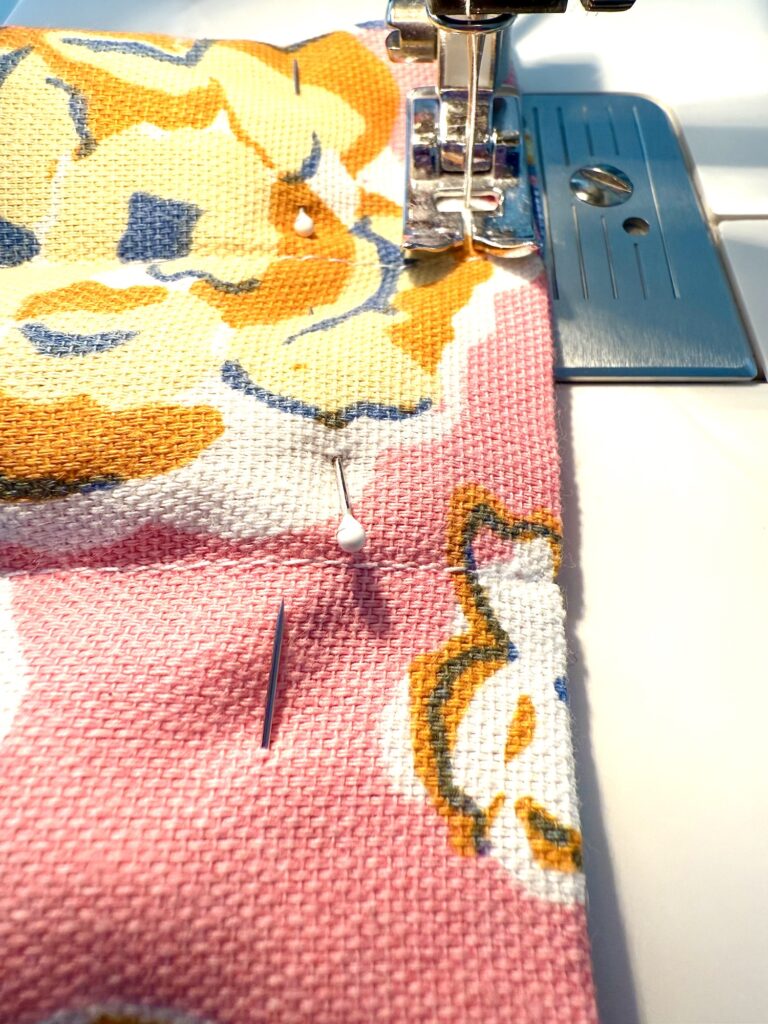
Remove the pins and fluff the heating pad to distribute the rice evenly.
That’s it! You are done!
How to Use the Heating Pad
Fold the heating pad in half and put in the microwave.
Microwave on high for 1-2 minutes, checking every 30 seconds to see if it is hot enough.
Helpful Tips I Learned While Making These Heating Pads
- Instead of rice, you could also use flax seed.
- Brown rice is not suggested because it has oils and can stain the fabric over time.
- Dried flowers or herbs and essential oils can be mixed in with the rice. However, these natural fragrances aren’t very strong and they will fade over time.
- Fragrance oil can be added to the rice before putting in the heating pad. This synthetic fragrance will last longer and be stronger.
- Do NOT use any fabric that can’t be exposed to high heat, such as polyester or silk.
- When drawing the lines, disappearing ink is the best solution because you will be drawing on the visible side of the fabric. Don’t get a heat- or water-disappearing pen because you won’t be able to iron the heating pad after stuffing it!
- An alternative to a disappearing ink pen is to use straight pins to mark where the lines should be sewn.
- If you are making several of these DIY rice heating pads, I suggest creating a cardboard or paper template to trace.
How to Clean
If the heating pad becomes stained, spot clean with a damp towel. Do not soak or put this in the laundry machine!
Want to save this idea? Pin it to Pinterest!
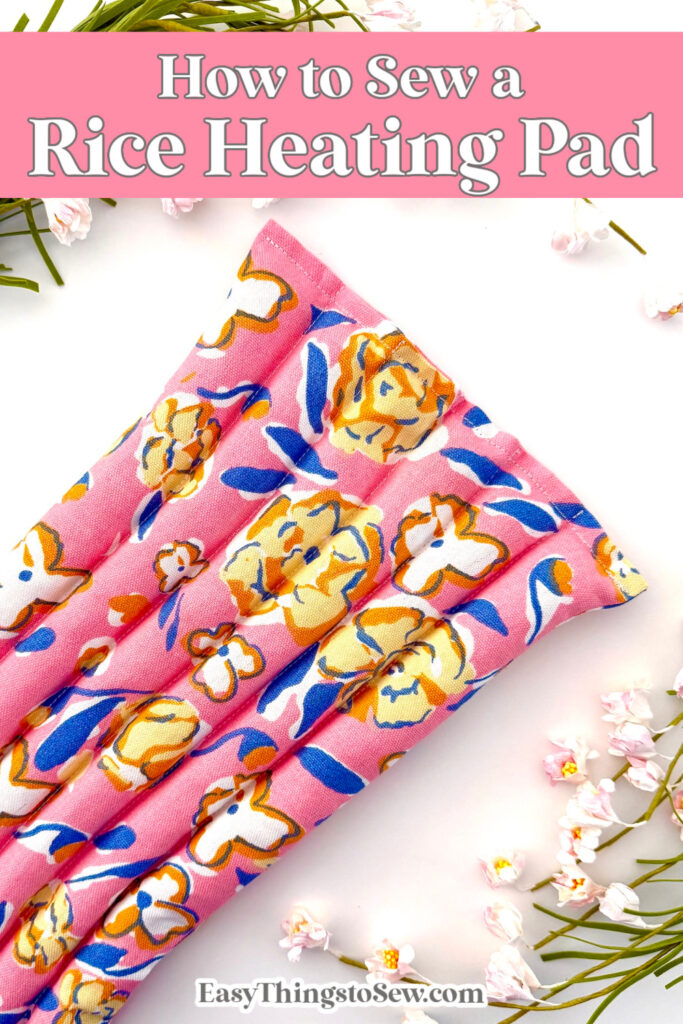
If you like this easy DIY rice heating pad, be sure to see these self-care sewing projects next: